
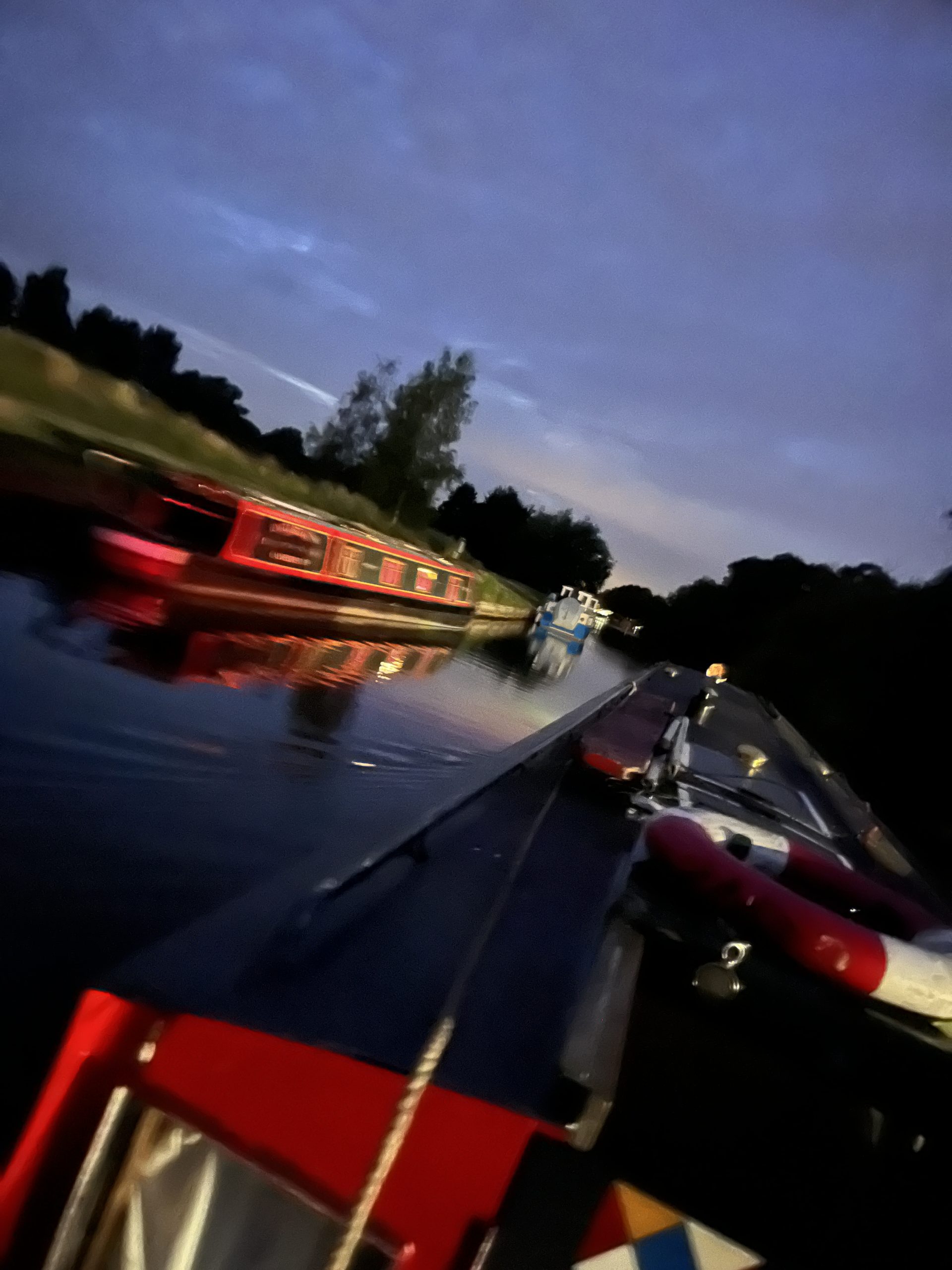
Leaving Oxford behind to continue my journey, I arrived at Isis Lock—either the final lock of the Oxford Canal or the first, depending on your direction. This is the point where the Oxford Canal meets the River Thames, and I was in for a real surprise.
Things got off to a rocky start. The boat ahead of me blocked my exit, and once I did manage to move off, I immediately felt the sheer power of the river. The current caught my bow and began pushing me dangerously close to a weir. I couldn’t do much to fight it. I ended up leaping onto the bank and hauling the boat around by hand to regain control. Only then was I finally on my way.
One of the first sights on the Thames is the old, disused railway swing bridge. As you bear left from the lock, the change in scale is dramatic—you go from a narrow 40-foot-wide canal to a river that’s easily 100 feet across. Great if you fancy a U-turn!
Unlike the canal network, which is managed by the Canal & River Trust, the rivers are under the care of the Environment Agency. One major difference you’ll notice right away is mooring. Designated mooring spots usually come with a fee—typically £5 to £10 per night—so most boaters opt for wild mooring. That means finding any suitable bit of riverbank and pulling in, regardless of the brambles, nettles, weeds, or overhanging branches that might try to take a chunk out of your paintwork. My first night was spent on a free mooring just past a lock.
After the stillness and calm of the Oxford Canal, the Thames came as a bit of a shock. It’s much busier, and you really need eyes in the back of your head! The speed limit is 8 knots (about 9 mph), but my boat tops out at 4 mph—and even that feels like a struggle sometimes. Try pushing it, and she’ll quickly let you know she’s not a fan of speed.
Then there’s the wind and the river’s current to contend with. Heading upstream into a headwind? Expect your fuel consumption to skyrocket—a lesson I learned the hard way. But more on that later…